The Journey of a Medical Breakthrough Before It Reaches the Headlines
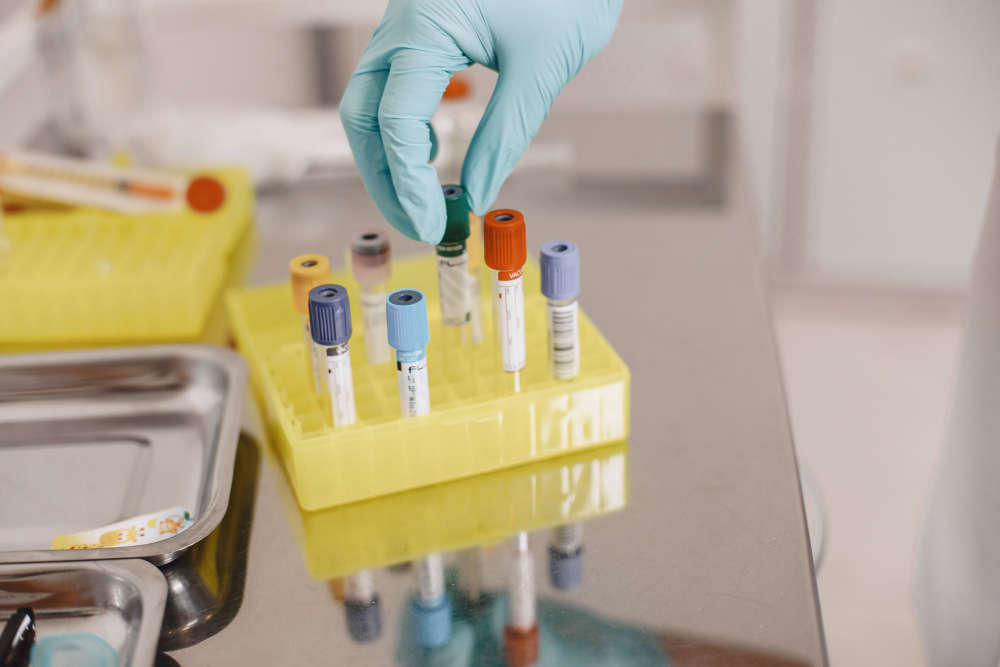
When a medical breakthrough appears in the news, it can feel sudden. One day, people are reading about a new treatment, a promising therapy, or a major scientific discovery that could change lives.
Behind that headline, however, is usually years of careful work.
A breakthrough does not begin with a press release. It begins with a question, a sample, a theory, a failed experiment, and a team of researchers willing to keep going long before the wider world is paying attention.
Here is the step-by-step journey many medical breakthroughs take before they ever reach the public eye.
Step 1: Researchers Identify an Unanswered Question
Every breakthrough starts with uncertainty.
Scientists may notice that a disease behaves differently in certain patients, that an existing treatment does not work for everyone, or that a biological process is still poorly understood.
This first stage is not always dramatic. It may begin with a small observation in a laboratory, a pattern in patient data, or a problem clinicians encounter repeatedly in practice.
The question might be simple: why does this happen?
That question becomes the starting point for a deeper investigation.
Step 2: The Right Research Materials Are Selected
Before researchers can test an idea, they need reliable materials.
This may include cell lines, tissue samples, biological models, or other research resources that allow scientists to study disease behaviour in a controlled environment.
The quality of these materials matters enormously. If a sample is contaminated, poorly documented, or unsuitable for the study, the research can produce misleading results.
That is why access to trusted suppliers and authenticated biological resources is such an important part of early-stage discovery. Research teams often depend on specialist platforms such as www.cytion.com to source the materials needed to support accurate, consistent scientific work.
Without the right foundation, even the most promising idea can struggle to move forward.
Step 3: Early Laboratory Testing Begins
Once researchers have the right materials, laboratory testing can begin.
At this stage, scientists may study how cells respond to certain compounds, how a disease pathway behaves, or how a particular genetic change affects biological function.
This is where many ideas fail.
A theory that looks promising on paper may not produce meaningful results in the lab. A potential treatment may show no effect. A biological mechanism may turn out to be more complicated than expected.
Failure is not necessarily wasted effort. Each result helps researchers narrow their focus and understand what is not working.
Step 4: Promising Results Are Repeated and Validated
One positive result is not enough to make a breakthrough.
Researchers must repeat experiments to confirm that the findings are reliable. They may test the idea using different models, conditions, or methods to see whether the result remains consistent.
This stage is essential because science depends on reproducibility.
A finding that cannot be repeated is unlikely to progress further. A result that holds up under repeated testing, however, may suggest that researchers have identified something genuinely important.
Validation turns an interesting observation into a stronger scientific claim.
Step 5: Clinical Trials Test Safety and Effectiveness
For treatments, therapies, and medical interventions, clinical trials are one of the most important stages.
These trials are designed to assess whether a potential breakthrough is safe and effective in humans.
Early trials usually focus on safety and dosage. Later trials examine whether the treatment works for a larger group of patients and how it compares with existing options.
This process can take years.
Many potential treatments do not make it through clinical trials. Some prove unsafe. Others are not effective enough. Some work only for a narrow group of patients.
The breakthroughs that survive this stage are supported by strong evidence, not just early excitement.
The Headline Is Only the Final Chapter
Medical breakthroughs are rarely sudden.
They are built slowly through careful scientific work, reliable research materials, repeated testing, and rigorous review. Every stage matters because each one helps determine whether an idea is strong enough to move forward.
The next time a discovery appears in the news, it is worth remembering everything that happened before the announcement.
Behind every headline is a long chain of decisions, experiments, setbacks, and evidence. The breakthrough may be what the world sees, but the journey behind it is what made it possible.