


What the dealer's rules mean for every live Blackjack hand
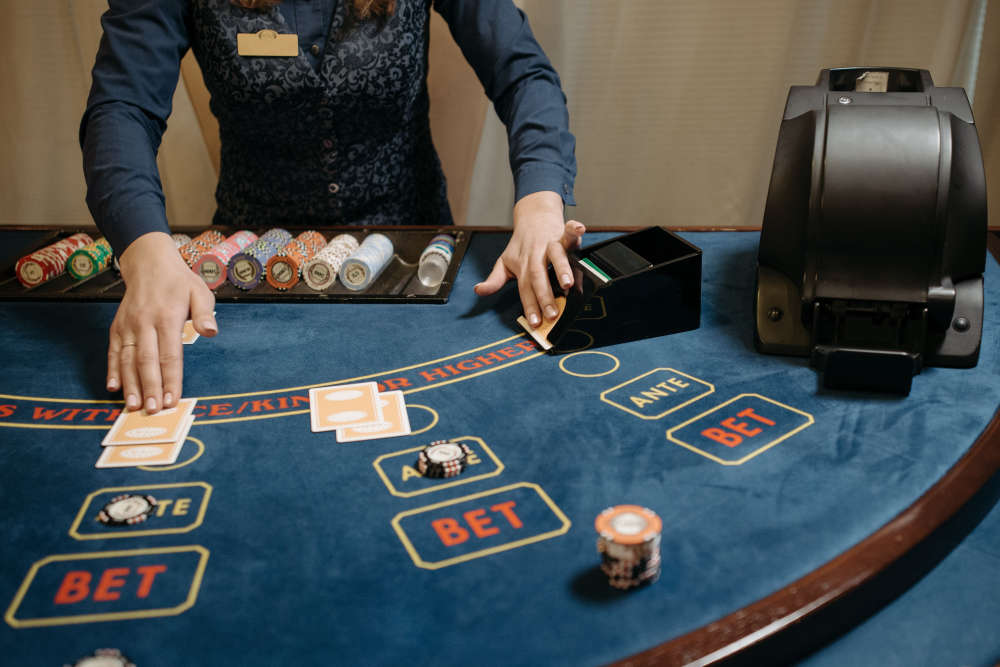
In live Blackjack, the dealer doesn't make any decisions of their own. Every card they draw follows a fixed set of house rules, and those rules shape the options open to you on each hand. The same rules apply across tables that offer dealer led play at any hour, so knowing how they work makes it easier to follow each round and understand why the dealer acts the way they do.
The dealer follows a fixed drawing rule
The dealer must draw a card on any total of 16 or below and stand on 17 or above. There's no room for personal judgement. If the dealer holds 15 and you're holding 20, they still draw, because the rule applies in the same way to every hand at the table.
This makes the dealer's play predictable. Once every player has acted, you already know how the dealer will complete their hand.
Soft 17 and why it matters
A soft 17 is a hand that includes an Ace counted as 11, such as an Ace and a six. Some tables require the dealer to stand on soft 17, while others require them to draw another card. Many live tables state that the dealer stands on all 17s, but this can vary between games.
Standing on soft 17 slightly lowers the house edge compared with drawing on it. The difference is small, and the game rules on screen will confirm which version applies.
How the dealer's second card is dealt
In most live Blackjack streamed to UK players, the dealer receives one card face up and takes their second card only after every player has finished their hand. This is known as the no hole card rule.
At American style tables, the dealer takes a face down card straight away and checks for Blackjack when showing an Ace or a 10 value card. The timing matters because it decides what happens to any extra bets placed when you double or split. Tables differ on whether those extra bets are returned if the dealer completes a Blackjack, and the game rules set this out.
What the dealer's upcard tells you
Because the dealer must keep drawing on totals from 12 to 16, their upcard gives a rough idea of how the hand could develop. When the dealer shows a five or a six, they go over 21 a little over 40% of the time. With a 10 value card showing, that figure falls to roughly one in five hands.
These figures describe long run patterns rather than any single hand. Each round is still decided by chance, and no upcard makes a particular outcome certain.
Payouts and insurance
At standard tables, a Blackjack pays three to two and any other hand that beats the dealer's pays one to one. When your total matches the dealer's, it's a push and your stake is returned.
If the dealer's upcard is an Ace, you'll usually be offered insurance. This is a separate side bet on the dealer holding Blackjack, and it pays two to one. Insurance generally carries a higher house edge than the main bet.
Playing within UK regulations
Online gaming in Great Britain is regulated by the UK Gambling Commission, under the Gambling Act 2005. Licensed operators must offer tools such as deposit limits and time reminders, and only those aged 18 or over can play.
Each hand ends once the dealer settles all bets, and you can stop playing at that point. If you'd like support with your gaming habits, trusted organisations offer free and confidential advice.

