
A Jersey grower says the weather may change farming, but that we can adapt, rather than fear not being able to provide for ourselves.
Extreme summer heat means Britain is facing its worst harvest since records began.
Production of wheat, barley and oats, which are used in things like bread, beer and animal feed, is projected to drop by 2.5 million tonnes.
It as July was Jersey's hottest month ever on record.
But, a Jersey grower says he doesn't 'fear' food insecurity here for now; instead, that farming and growing will have to adapt.
Ollie Griggs started Jersey's Lomah Farm 5 years ago, and says that smaller growers, and their ability to be flexible, mean they are less endangered by extreme weather.
Ollie says they can be flexible with crops and how they work the soil:
"A lot of larger scale farmers are farming in a model that is probably a bit less forgiving than what we're doing; heavy machine cultivations, big monocrops, and chemical usage.
"I don't think that lends itself to arid climates.
"We're (Lomah Farm) trying to regenerate the soil, improve its capacity to hold moisture and produce vegetables into the future.
"I think it will probably change farming if this weather becomes regular, but at the moment, I don't see reason to fear that we can't provide for ourselves; it's just going to have to adapt."
"We're small-scale intensive and organic in our growing. We don't plough a whole field in one go anyway; we use a small rotivator.
"This year, we're working the soil a lot shallower, only a couple of inches, if that, disturbing it as little as possible, because the more we turn it into dust, the less moisture it's going to be able to hold."
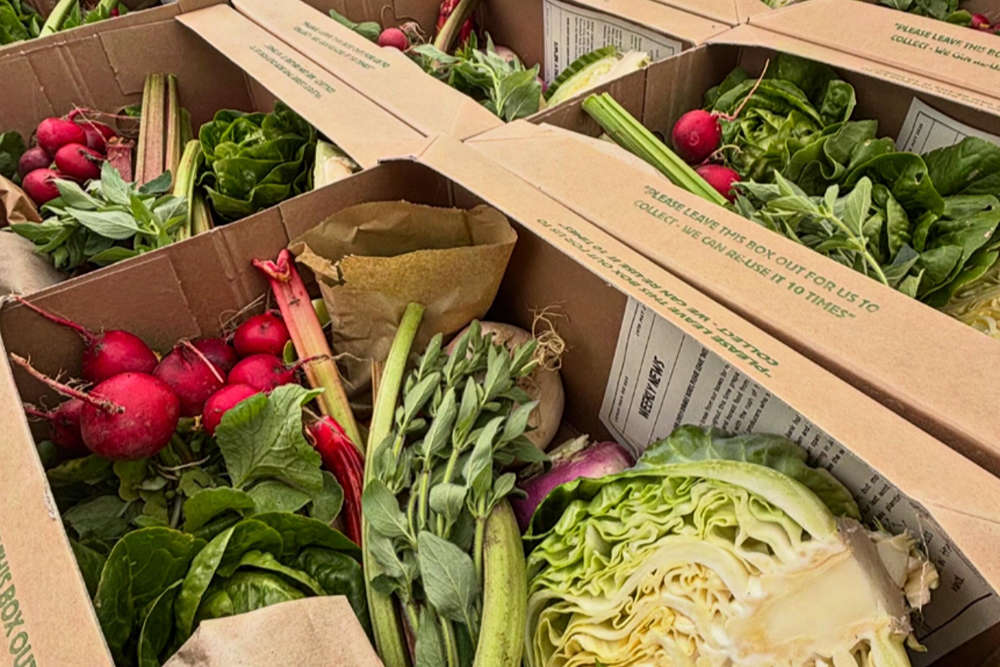
Lomah farm supplies seasonal veg boxes, and Ollie says they only put in them what is available. He says it is more sustainable, puts less pressure on their growers, and is flexible to weather:
"It's much better because if we're always offering as many things as possible, it puts so much pressure on growing to always have something, and when the weather doesn't permit that to happen, it's just stressful.
"This model is so much easier.
"For example, now, Pak-Choi and Radish, they need water; there's no point in even trying. They're getting heat stress, they're getting dry stress, so the actual vegetable won't get very big, and it will contain chemicals that will just taste sharp and bitter."
Ollie shared how Jersey farmers are coming together:
"The growers around us are all growing potatoes, and they're irrigating them with a pipe going from around three miles away.
"We've got one patch in a field that we can't reach with water, and our supply is drying up, and I asked them yesterday if they wouldn't mind watering my 20m by 30m patch.
"And they were so busy, but I came out this morning, and they've actually put the irrigation out on my patch.
"That's the Lamys, and I'm so thankful for that - now we can put our winter crops in and get them established much more easily."
 New Government CEO appointed
 AquaSplash pricing announced when it becomes government-run
 More public BBQ sites closed due to wildfire risks
 New government service for vulnerable teens
 The votes are in for the name of Jersey Zoo capybara
 Free breast pump scheme launched to support Jersey mums
 Water supplies in Jersey down 15% during hottest month on record
 La Collette headland fire under control