

The rise in gas prices over the past 48 hours is without precedent.
Even in the chaotic opening weeks of the Ukraine war in 2022, the gas price never doubled. But that is precisely what has happened to wholesale methane prices in the UK.
And since gas prices are arguably the single most important price in Britain - the lynchpin of our power network, determining prices for electricity, underpinning industrial production and the manufacture of chemicals, trickling indirectly into the price of food and other sundry items - this is of enormous consequence.
Markets latest: FTSE 100 loses £100bn and fuel warning issued
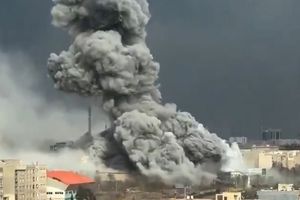
The trigger for the sharp rise is the continued chaos in the Gulf, as oil and gas facilities come under bombardment from Iranian drones. No one seems to know how long this will last, but that is among the most important of all questions.
The longer it goes on, the higher gas prices are likely to climb. Although the speed of the rise in the past 48 hours is faster than any other comparable period in history, the absolute level of gas prices remains far lower than at the peaks in the Ukraine war in 2022. Then again, given that triggered an unprecedented energy price shock across Europe, not to mention a forced deindustrialisation of the continent that continues today, that is far from reassuring.
The longer it continues, the greater will be the impact on household bills in the UK, which have been fixed until June (and benefit from a £150 discount thanks to a measure in the last budget), but are due to reflect wholesale prices as of July.
All of which is why the events unfolding in Iran and its surroundings remain crucial for this country's economy.
Not that you'd guess much of this from the text of the Office for Budget Responsibility's latest big forecast. To judge from it, and Rachel Reeves's appearance in the House of Commons today, you might have assumed Britain has now vanquished the cost of living problems that beset it for the past four or five years. It paints a picture of inflation dropping down to 2% for an extended period.
But you have to flick all the way to page 109 of the spring forecast to find the most important datapoint of all. There, in table A.3, you will find the gas price expectations the OBR's latest forecasts were based on. They are more or less flat. Those, after all, were the prevailing expectations for energy prices when the report was finalised last week.
Read more:
Iran war latest
UK bills cannot escape forces of Iran war
But since then, well, as you know, gas prices have gone through the roof. So, essentially most of the key assumptions in the report about inflation are not worth the paper they're written on.
It is still way too early to pre-judge what this implies for the UK economy. It's not beyond the realm of possibility that gas prices come down in a few weeks. But by the same token it's also quite possible they go even higher. And if they do so, the implications for a Britain barely recovered from the last energy price shock are profound and somewhat grisly.

(c) Sky News 2026: Iran war leaves forecast for low UK inflation not worth the paper it was written on
 AI could be giving US lethal edge in Iran war - but there are dangers
 Murder investigation launched after man dies following Birmingham stabbing
 Iran made a mistake targeting civilians in Middle East, says former CIA director
 Notorious Sicilian mafia boss behind multiple murders has died in prison