

Parts of England have seen their longest spells with zero recorded rainfall since the mid-1990s, figures show.
Central and south-east England had an average of zero rainfall measured across the Met Office's weather stations for 14 days in a row, from 2 July to 15 July.
This is the longest unbroken run for the south-east since a 15-day spell in April 1997.
For central England, it is the longest period since a 14-day run of no recorded rainfall in June 1996.
The figures, which are part of the Met Office's HadUKP data series and published online, are based on daily weighted totals from a network of weather stations across the country.
Data could show the rain-free spells in both regions extending for even longer, with figures for 16 July yet to be published.
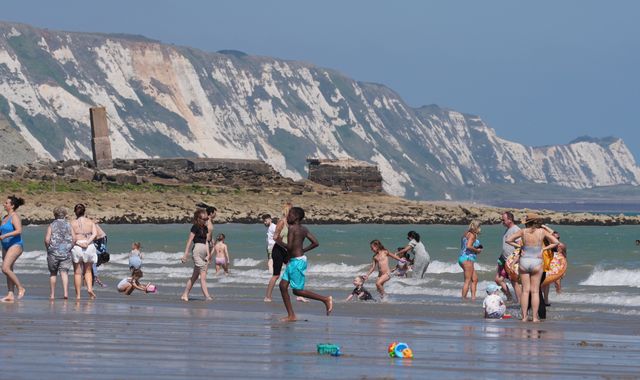
It comes as the warm and sunny weather is set to continue and as the UK has so far coped with a sweltering summer of above-average temperatures and persistently toasty nights.
On Thursday, temperatures in the UK peaked at 30.6C (87F) at Merryfield in Somerset, the Met Office said, making it the 12th day in a row when 30C has been exceeded somewhere in the country.
There were 18 consecutive days of 30C-plus temperatures in 1976, when drought conditions damaged crops, scorched landscapes and forced people to use standpipes in the street.
There have now been 27 days in 2026, consecutive and non-consecutive, when 30C has been exceeded somewhere in the UK - seven in May, eight in June and 12 in July.
The record for the number of 30C-plus days in a calendar year is 34, which was set in 1995.
Read more:
What is a 'firewave'?
The hot weather is set to last for at least seven to 10 more days, forecasters have said.
As we head into the weekend, drivers are being warned to expect the busiest summer getaway on the road in four years.
The RAC has estimated that 14.1 million motorists will embark on journeys for holidays or day trips between Friday and Sunday.
That is the second-highest since it began tracking the data in 2016, surpassed only by 18.8 million in 2022 when the easing of the COVID restrictions sparked a surge in travel.
Most schools in England and Wales break up for the summer holidays at the end of this week or early next week, while the academic year has already ended in Scotland and Northern Ireland.
The RAC predicted Saturday will be the busiest day on the roads for getaway journeys, with 3.8 million planned.
Friday and Sunday will each see an estimated 3.4 million, while a further 6.8 million trips will be spread across the three-day period, with drivers unsure which exact day they will hit the road.
Met Office spokesperson Grahame Madge said: "The settled and fine conditions people are currently enjoying look locked in for the next seven to 10 days and are likely to remain strong."

(c) Sky News 2026: Parts of England have recorded longest spell without rain since mid-1990s, figures show
 Man convicted of killing British tourist with single punch to be extradited to Greece
 Starmer is replaced as Labour leader today - and there is some trepidation as he leaves
 Man charged with assisting Iranian intelligence service, Met Police says
 Prostate cancer treatment with fewer side effects 'as effective as radiotherapy and surgery'

