



The impact smartphones have on the Bailiwick's youngsters is going to be studied.
A team from the University of the West of England will research the effects of phones on education and development.
Students, parents and staff from Guernsey and Alderney will be surveyed to help inform future policy, Public Health guidance, and World Health Organisation evidence on early brain development.
A survey of secondary and special school teachers in October 2025 revealed that there is no educational need for smartphones in schools.
The President of the Education Committee, Paul Montague, says the devices are not required in the classroom, and the government's current policies reflect this.
"We want our schools to be smartphone-free environments, but any further changes must be carefully considered and evidence-based."
 Deputy Paul Montague. Credit: States of Guernsey
Deputy Paul Montague told the States Assembly that the topic continues to raise international, national and local concern.
Jersey's government introduced a ban on phones in schools in September 2025.
READ: New school year begins with mobile phones banned
In the UK, the Education Secretary recently wrote to teachers saying phones should not be used throughout the school day.
This includes using them for calculators, research, or during breaks.
"All schools should be phone-free environments for the entire school day,
"That includes lessons, time between lessons, breaktimes and lunchtime. It means, for example, it is not appropriate for phones to be used as calculators, or for research during lessons.
"Schools should make sure those policies are applied consistently across classes and at all times and we want parents to back these policies too.
"You have my full support in taking this forward.
"Clear boundaries, applied with consistency and fairness, give pupils the best chance to learn and thrive, and schools should feel confident in setting and enforcing them."
- Bridget Phillipson, UK Government Education Secretary
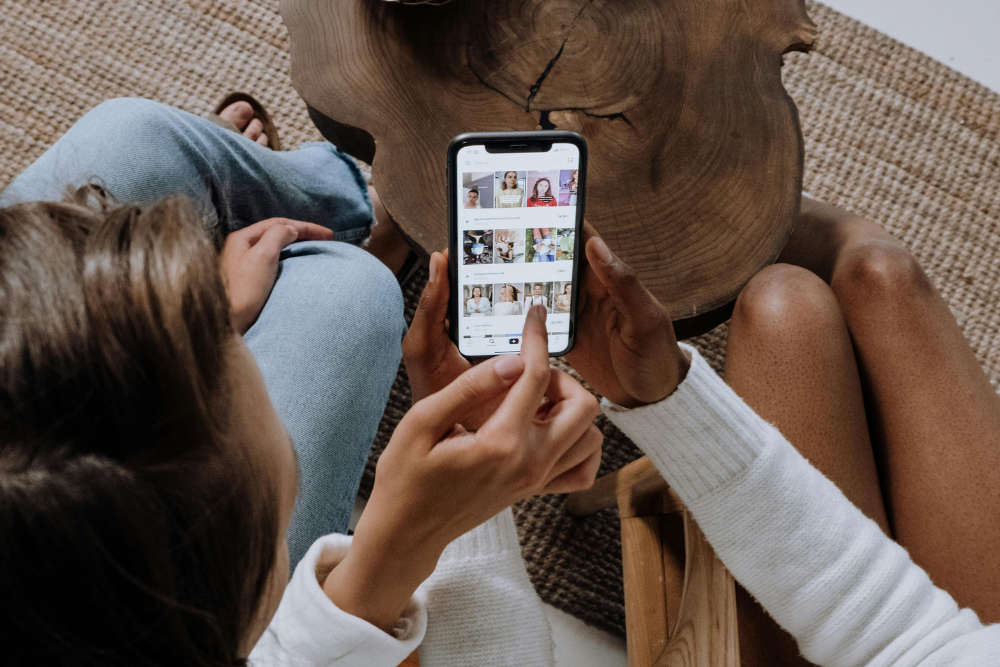
The UK is also considering a social media ban for children under the age of 16, a sentiment echoed by the Government of Jersey.
READ: Ministers back principle of social media 'restrictions' for under 16s
However, Guernsey is not in a rush to ban social media.
Head of Policy and Resources, Lindsey de Saumarez, has previously told Island FM that although reducing digital harm is important, the island will wait and see how other countries respond first.
"We’re all really, really aware of the risks of social media, and some of the harms attached to that, but actually some of the things I experienced with my own kids is that it also enables them to be more independent, make their own arrangements, and it can be a very positive thing.
"I think what everyone will be keen to focus on is how to minimise the harm without curtailing some of the benefits."
READ: No rush to ban social media for the under-16s in Guernsey
Australia led the movement to ban children under 16 from platforms such as TikTok, Instagram, and Facebook.
France has also backed a bill to ban social media access for under-15s, with Spanish Prime Minister Pedro Sanchez following suit with a proposed ban for under-16s, calling social media the digital 'Wild West'.
 Assisted dying will be offered in Jersey
 Guernsey Man (23) jailed for abusing teen girl
 New Guernsey charity to fund gender-affirming items
 Bank tax receipts boost the States of Guernsey's fortunes
 'Multi-generational' living could ease Guernsey's housing crisis
 Guernsey dance school upset by temporary theatre closure
 Guernsey's business leaders come out against a plan to pause GST
 Plans to improve the gene pool of the Royal Golden Guernsey Goat


Comments
Add a comment