

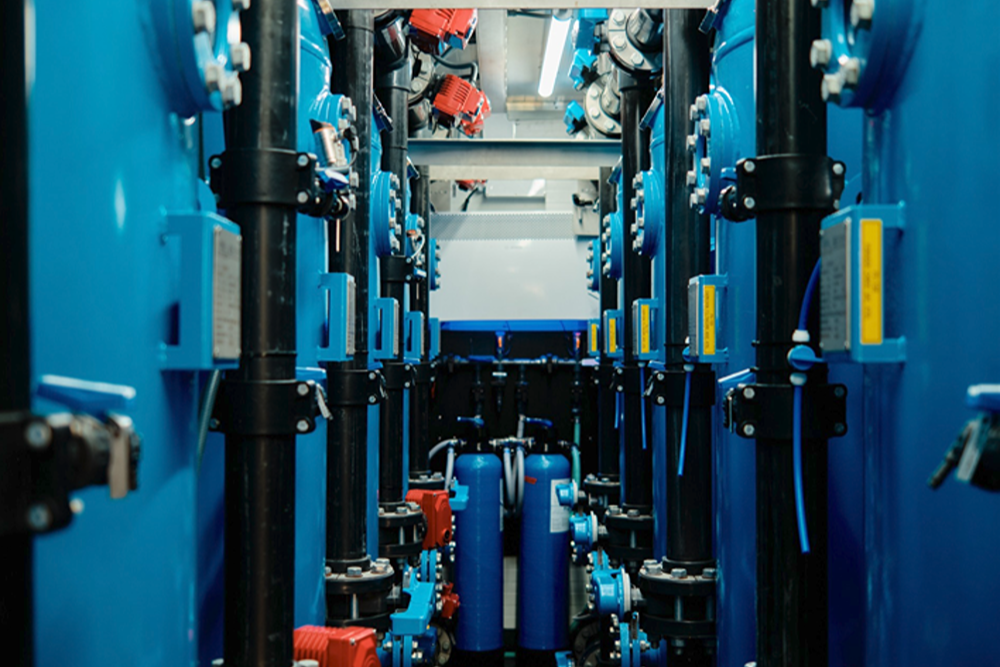
Treatment technologies being trialled by Jersey Water are showing reductions in PFAS in drinking water, but the utility also says it's too early to draw definitive conclusions.
The island's drinking water meets current UK and EU standards, but the trials are examining how to further reduce the chemicals' concentrations ahead of government plans to introduce legal standards.
Read: Jersey to introduce legal limit for PFAS in drinking water
Jersey Water has committed nearly £2 million to the trials through to December 2027, which is when it will make recommendations.
For now though, the utility says, whilst it's too early to draw conclusions, the first results are 'promising'.
They are showing a reduction in PFAS levels in small amounts of water after being treated in different ways.
CEO Helier Smith says they need another year to really understand whether these results can be sustained:
"Water quality changes and varies with the seasons, the chemistry changes, and whether or not we're using the desalination plants changes the chemistry of the water.
"So all of the different variables need to be taken into account.
"We can measure the performance of the pilot trials over the course of the 12-month window to get all the scenarios and understand how the treatment process is performing under the varying and changing chemistry of the water."
He says Jersey Water supports PFAS regulation, but that limits should be informed by research:
"We do know that water quality regulations around PFAS are getting tighter; the limits are reducing around the world, so we need to prepare for that.
"But (we need) to really understand the costs, the feasibility, the technologies - to have a full picture before we embark on setting limits within Jersey.
"The worst-case scenario, if you like, is a very low limit, which requires a brand new water treatment works, and we've indicated that could cost from £140 to 210 million, which is a huge amount of money.
"So we really need to explore every opportunity for delivering lower levels of PFAS in drinking water, because that's the right thing to do, but at a more affordable cost."
 Pair jailed for 'deplorable' attack outside mosque during Ramadan
 Jersey hosting inaugural 'Screen Summit'
 Channel Islanders could soon benefit from return of EU pet passports
 Remembrance Sunday in the Channel Islands
 'Military people are not good at asking for help... they have to be supported'
 Ministers 'do not endorse' Inquiry comments in safeguarding meeting
 Jersey FA over-50s walking football team are European Champions
 Call for government to rebuild reserves against increased global uncertainty