

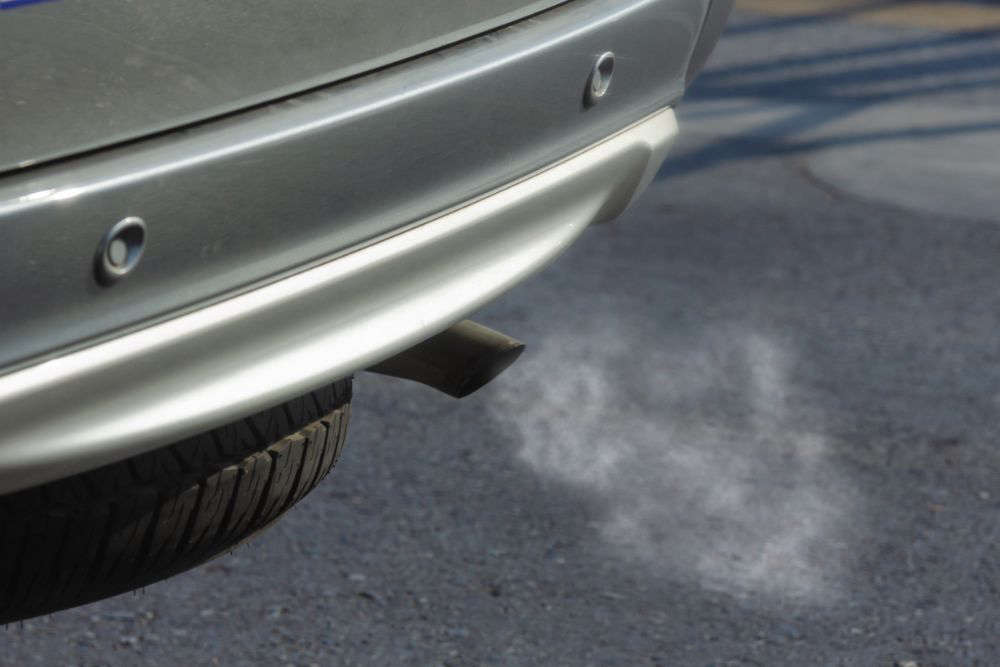
A new States report shows transport is the major contributor to overall greenhouse gas emissions, which rose fractionally on 2021 figures.
The annual greenhouse gas bulletin shows a 0.2% increase for 2022, the latest figures available, but it's predicted to dip again in 2023.
Guernsey produced 298.5kt of carbon dioxide equivalent in 2022, compared to 298.0kt in 2021.
Transport contributes 33.5% and vehicle emissions make up exactly 66% of that figure. Emissions from both aircraft and shipping rose in 2022 but that follows the quiet pandemic period when far fewer people travelled. Aviation contributed 20% and shipping 11%.
Heating and hot water, both in commercial and domestic settings, are the next biggest contributor after transport, at 25%.
CO2 recordings began in 1990 and since then Guernsey's contribution to global warming has steadily fallen and is now at 46.8% of the 1990 figure.

One of the key reasons is that on island power generation reduced massively in 2001, following the electricity connection to Jersey and the French grid.
But there have been spikes, when the cable has failed, as it did in 2012 and 2018/2019 and the power station was the sole source of electricity generation. Overall, emissions from power generation have decreased by 84.5% between 1990 and 2022.
 Food waste prevention app launching in Guernsey
 Advice for Guernsey university students following UK meningitis outbreak
 High alcohol consumption in Guernsey seen as normal
 Guernsey pupils find the purr-fect way to practise reading
 Teams decided for de Putron Final 2026
 Number portability issue between Coop Mobile and JT resolved
 Guernsey's emergency sleeping pods 'in demand'
 Alderney one-step closer to getting a swimming pool